
Straight answer
What is an OVA? An original video animation: anime made to be sold on home video (VHS, LaserDisc, DVD, Blu-ray) without airing on TV or in theaters first. An ONA premieres online instead, and an OAD is a disc bundled with a manga volume. Some OVAs are canon, many are bonus side stories.
You finish a season. The episode list says “OVA”. Or “OAD”. Or the whole show is labeled “ONA”.
It’s not that deep. All three labels describe how an anime first reached viewers, not how good it is or whether it counts. Below: what is an OVA, how it compares with every other format, and the part nobody explains well, whether to watch it and where.

What is an OVA?
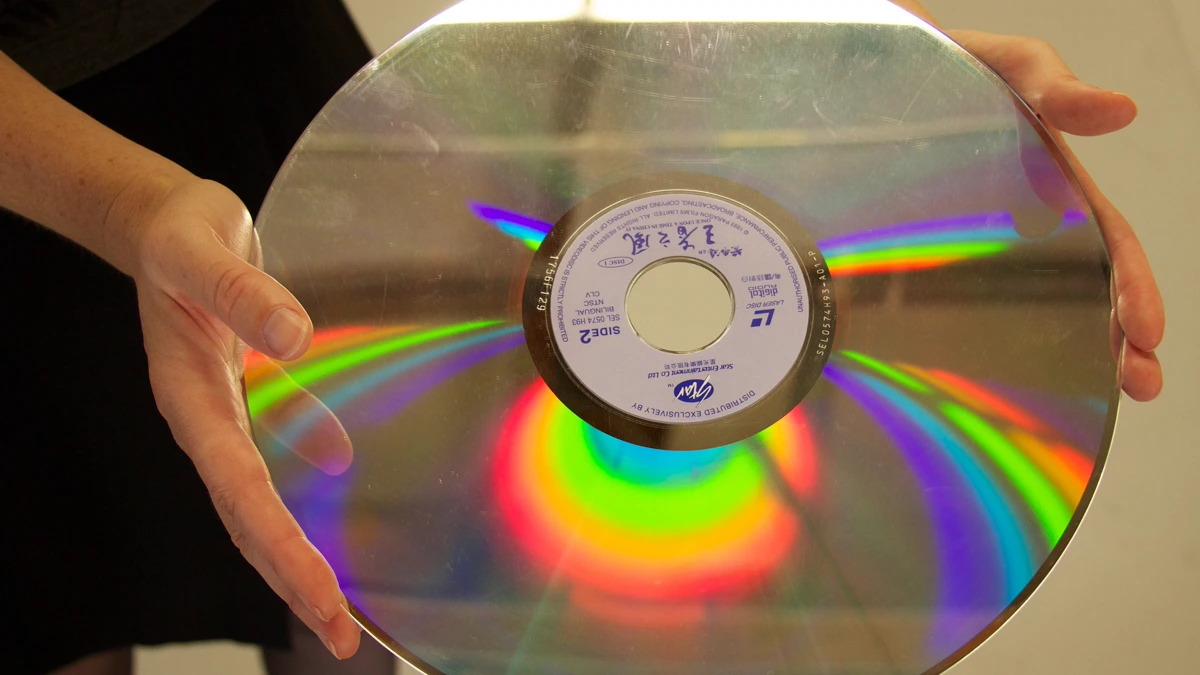
An OVA, short for original video animation, is anime released straight to home video without a TV broadcast or theatrical run first. Wiktionary defines OVA as an initialism of original video animation, “a direct-to-video anime”, and Wikipedia’s glossary of anime terms says it’s intended for VHS or DVD rather than movies or television.
That’s the whole test. Release channel decides the label. Japanese with Anime puts it the same way in its 2017 explainer: if something is sold on disc first and aired later, it’s still an OVA; if it aired first and then came out on disc, it isn’t.
Everything else varies. Wikipedia’s OVA article says episodes run anywhere from a few minutes to two hours or more. An OVA can be:
- A standalone series that never touched TV, like the 10-episode Hellsing Ultimate (2006 to 2012, per Wikipedia).
- A bonus episode on the Blu-ray or DVD volumes of a TV show.
- A side story or sequel to an existing series or film, which Wikipedia lists alongside music-video collections as common OVA types.
OVA meaning in anime: where the term comes from
The OVA meaning in anime comes from Japanese industry shorthand: OVA stands for オリジナル・ビデオ・アニメーション (orijinaru bideo animēshon), “original video animation”, read aloud in Japanese as ōbuiē. OAV, “original animation video”, is the same thing; Wiktionary lists the two as synonyms.
Older fans saw OAV on 1990s tape boxes; Cultured Vultures’ 2023 explainer confirms the terms are interchangeable.
A special is not automatically an OVA, either. Epicstream’s explainer notes specials can air on TV; an OVA starts on home video.
OVA vs ONA vs OAD vs TV vs movie
The difference between an OVA, ONA, OAD, TV series and anime movie is where each one premiered: home video, the internet, a disc packed with a manga volume, broadcast TV, or a cinema. Length, budget and canon status follow from that channel, but none of them is fixed. Use the table as tendencies, not rules.
| Format | First released on | Typical length | Budget pattern | Canon tendency | Example |
|---|---|---|---|---|---|
| TV series | Broadcast TV, weekly | About 24 minutes an episode, often 12 or 13 per season | Spread across a weekly schedule | The main line of the story | Girls und Panzer, 12 episodes, 2012 to 2013 |
| OVA | Home video: VHS, LaserDisc, DVD, Blu-ray | A few minutes to two hours or more | Historically between a TV episode and a film, or very small | Mixed: some adapt the source, many are bonus stories | Hellsing Ultimate, 10 episodes, 2006 to 2012 |
| ONA | The internet: streaming or download | From short web clips to full streaming seasons | From tiny web shorts to platform-funded series | Main line when it is the show’s only adaptation | Pluto, 8 episodes, Netflix, 2023 |
| OAD | A DVD packed with a limited-edition manga or light novel volume | Usually one episode per bundled volume | Sold at bookstores with the special edition, not rented | Often adapts the author’s extra chapters, not always | Attack on Titan “Ilse’s Notebook”, volume 12, 2013 |
| Theatrical film | Cinemas | Around two hours | Above an OVA on Cartoon Research’s TV-to-film budget scale | Varies: some adapt the source, many original films sit outside it | Heaven’s Feel trilogy, 117 to 122 minutes each |
Source: Komogear comparison built from Wikipedia (OVA, ONA, Hellsing, Pluto, Girls und Panzer, Attack on Titan episode list, Heaven’s Feel), Japanese with Anime (2017) and Cartoon Research (2016), as of October 2026.
The budget column is the softest. Cartoon Research’s history of the first OVA says early releases had a budget between a TV episode and a theatrical release, “or the opposite”, short productions made on tiny budgets.
Where did OVAs come from?
OVAs came out of Japan’s 1980s home-video boom. The first title billed as an OVA was Dallos, released by Bandai in 1983, according to Wikipedia’s OVA article, which also notes an earlier 1983 attempt, The Green Cat, that doesn’t count as the first. Production companies then made OVAs freely during the economic bubble.
The Dallos story is a good one. Cartoon Research’s 2016 profile says it was planned as a TV series by Studio Pierrot, cancelled, then rescued when Bandai Visual agreed to release the first four episodes direct to video. The first one out was actually episode two, on December 21, 1983, co-directed by Mamoru Oshii. Gilles Poitras’s Anime Essentials (2001), which Wikipedia cites, dates the format to Dallos too.
The Japanese side has the numbers English guides skip. Japanese Wikipedia’s OVA article says Dallos sold at 6,800 yen a volume, shipped 20,000 copies across four volumes, and that yearly OVA releases grew from one title in 1983 to more than 300 in 1989. It also credits rental video shops, which spread to ordinary households from the late 1980s, with putting OVAs in front of far more viewers.

Then the money dried up. Wikipedia says new OVA titles slowed as Japan’s economy worsened in the 1990s; Japanese Wikipedia adds that late-night TV and satellite channels took over that ground.
What is an OAD?
An OAD, or original animation DVD, is an anime episode sold on a disc packed with a special edition of a manga or light novel volume, usually only at bookstores. Wikipedia’s OVA article says the term took on that meaning in 2008, and Japanese Wikipedia traces the idea to a 2007 Kodansha plan pairing new volumes with new anime DVDs.
The first wave proves it. Wikipedia’s Tsubasa: Reservoir Chronicle article says the three Tokyo Revelations DVDs came bundled with limited versions of volumes 21, 22 and 23, released between November 16, 2007, and March 17, 2008.
OADs are where canon questions get interesting, because the book’s publisher is directly involved. Wikipedia’s Attack on Titan episode list says “Ilse’s Notebook” came with the volume 12 limited edition on December 9, 2013, and adapts a special chapter from volume 5. The next two, bundled with volumes 13 and 14, follow the trainee squad on side adventures.
Light novels do it too: the first KonoSuba OVA came with the ninth light novel volume in June 2016, per Wikipedia. New to that kind of story? Start with what isekai means.
What is an ONA?
An ONA, or original net animation, is anime that premieres on the internet, by streaming or download, instead of on TV, in cinemas or on disc. Wikipedia’s ONA article notes Japan calls it “web anime” and lists Makoto Shinkai’s 1997 short Other Worlds among the pioneers. Early ONAs were short; modern ones are often full seasons.
Wikipedia says ONAs tend to run shorter than TV anime, sometimes only a few minutes, but that changed in the second half of the 2010s, when full series started being licensed exclusively for services like Netflix, Amazon Prime Video and Disney+.
Devilman Crybaby is a 10-episode ONA that premiered on Netflix on January 5, 2018, from Science Saru, and Pluto is an 8-episode ONA by Studio M2 that premiered on Netflix on October 26, 2023, both per Wikipedia. Neither is a side project.
Honest take: ONA is a delivery label, not a quality tier. If a show is labeled ONA, read it the way you’d read “TV”: it tells you where it premiered, and nothing about whether it’s skippable.
Is an OVA canon? Three checks
An OVA is canon when it adapts the original author’s material or is clearly built to fit the main story without contradicting it. You can tell with three checks: what it adapts, who made it and how it was sold, and whether the main story leaves room for it. Two yeses usually means canon; zero means bonus content.
- Check the source. Look up the OVA on Wikipedia or the official site and see if it adapts manga or novel chapters. “Ilse’s Notebook” adapts a special chapter from volume 5, per Wikipedia; that’s a strong yes.
- Check the package. An OAD sold with the author’s own book volume has the publisher in the loop. A studio-made bonus episode on a TV disc set has no such link. Same release channel, very different canon odds.
- Check the framing. Is it a “what if”, a dream, a crossover or a beach-day comedy? Then it lives outside continuity even if the author signed off. A gap-filler that shows a scene the TV version skipped usually fits.
Fans fight over edge cases. In an r/ShingekiNoKyojin thread asking which bonus episodes count as canon, the top reply called every one canon except a “what if” episode; replies pushed back that the episode came from a manga volume, and another said two of the others were studio-made and never written anywhere.
Filler works the same way. A filler list that sorts canon from non-canon episodes is just check one, applied a thousand times.
Where do OVAs go in a watch order?
Watch an OVA at the point in the story where it takes place. A gap-filler goes right after the episode it fills, a bonus disc episode goes after its season, and a prequel side story goes after the season that makes you care about those characters. If the OVA spoils nothing and needs nothing, its release date is fine.
- Gap-fillers: drop them in place. Girls und Panzer: This Is the Real Anzio Battle! shows the match that happened off-screen in episode 7, per Wikipedia, so it goes after episode 7 or right after the season.
- Disc bonus episodes: after the season they shipped with.
- Prequel side stories: after the main season, not before. The emotional hook needs the main cast.
- Remakes and alternate takes: treat them as a separate path. Hellsing Ultimate follows the manga more closely than the 2001 TV show, per Wikipedia, so pick one version rather than mixing both.
Long franchises stack OVAs, films and remakes together. Our watch order for a long-running visual novel franchise shows how that sorts out in practice: core path first, extras marked optional.
Why did ONAs replace so many OVAs?
ONAs replaced many OVAs because viewers moved from buying discs to streaming. The Association of Japanese Animations’ Anime Industry Report 2019, as reported by Anime News Network, found Japan’s anime internet distribution market (59.5 billion yen) overtook home video (58.7 billion yen) in 2018 for the first time in 16 years of tracking.
OVAs lived on disc sales. When fans stopped buying discs, the same kind of show went to streaming platforms, and the label changed from OVA to ONA.
The slide kept going. Japan’s anime home video market shrank 31% in 2025 to 18.7 billion yen, according to the Japan Video Software Association survey reported by Animenomics in March 2026, while anime streaming revenue among its members was 2.4 times the 2021 level. Animenomics adds that anime home video revenue is now under a fifth of its 2005 peak.
So OVAs didn’t vanish. They shrank into niches: disc bonuses, OADs with book volumes, the odd event screening. One reply in an r/anime thread on direct-to-video vs regular episodes made the practical point: with everything going straight to streaming, the label barely matters for new shows, but it still helps when you dig into older ones.
So what is an OVA good for in 2026? Older series hide some of their best material on tape-era releases, and the label tells you where to dig. More terms like this live in our anime explainers.
Fans also ask
Is OVA the same as OAV?
Yes. OAV stands for original animation video and OVA for original video animation, and Wiktionary lists them as synonyms for the same direct-to-video format. OAV was more common on older English releases; OVA is the usual label today.
Can I skip OVAs?
Usually, yes. Most OVAs are bonus stories that the main plot never depends on. Run the three checks first, though: if an OVA adapts the author’s own chapters or fills a gap the TV version skipped, watch it in story order.
Are OVAs higher budget than TV episodes?
Often, but not always. Cartoon Research’s history of the format says early OVAs had budgets between a TV episode and a theatrical film, allowing higher production values than 1980s TV, while others were short productions made on tiny budgets.
Can an OVA be shown in theaters?
Yes, sometimes. Wikipedia says the Girls und Panzer Anzio OVA opened in 14 Japanese theaters and on online services on July 5, 2014, and a 2025 KonoSuba OVA had a theatrical run on March 14 before its Blu-ray and DVD release on April 25.
Where can I watch OVAs legally?
Licensed OVAs usually sit on official streaming services or on Blu-ray next to the main series. Availability changes by region, so check the show’s official site or a tracker like JustWatch, as of October 2026. Many older OVAs are only on disc.
How we researched this guide: definitions were checked against Wiktionary and Wikipedia’s OVA, ONA and anime glossary articles, history against Cartoon Research and Japanese Wikipedia, and market figures against Anime News Network and Animenomics. Reader questions came from Reddit, YouTube and Google. AI helped draft this guide; a human writer checked every fact and edited it.
Sources: Wikipedia, Original video animation; Wiktionary, OVA; Wikipedia, Original net animation, Dallos, Hellsing, Pluto, Devilman Crybaby, Girls und Panzer, KonoSuba, Tsubasa and Attack on Titan episode list; Japanese Wikipedia, OVA; Cartoon Research (2016); Anime News Network (May 2020); Animenomics (March 2026); Japanese with Anime (March 2017).