Straight answer
The kuudere meaning is simple: a calm, cool, often expressionless anime or manga character who rarely shows feelings but has a hidden soft side for the people they trust. The word blends kūru, Japanese for “cool”, with deredere, “lovestruck”. A dandere is quiet from shyness; a himedere is proud like a princess.
Three quiet characters. One is calm, one is terrified, one thinks you should bow. Fans mix up kuudere, dandere and himedere constantly.
Here’s the kuudere meaning in plain terms, plus the two types it gets confused with most. The full dere family table lives in our tsundere guide. This one goes narrow: quiet vs cool vs proud.
What is a kuudere?
A kuudere is a character who stays calm and controlled, shows very little emotion on the surface, and keeps their real feelings private until someone earns them. Wiktionary defines the word as a calm, aloof, reserved fictional character who has a hidden soft side, especially for a love interest. That is the kuudere meaning fans use.
The surface gives it away. Flat voice. Short answers. No panic. Wikipedia’s kuudere article describes the type as stoic and expressionless, calm in stressful situations, and often the voice of reason during a conflict.
One detail matters most. Unlike a tsundere or a yandere, whose archetype is a shift in behavior, a kuudere usually keeps the same core traits through the story, per that same Wikipedia entry. The character doesn’t flip. You learn to read them.
- Speech: calm, plain, often monotone. Kotaku’s 2013 guide to the dere types says kuuderes “never seem to be overly happy, excited, or surprised”.
- Role: the one in charge. Wikipedia’s glossary of anime and manga terms says kuuderes tend to be leaders who are always in charge of a situation.
- Hidden side: loyalty and care that show in actions long before words.
Kuudere meaning in Japanese: where does the word come from?
Kuudere, written クーデレ in Japanese, is a fan-made blend of クール (kūru), the Japanese pronunciation of the English word “cool”, and デレデレ (deredere), which Wiktionary glosses as acting in a lovey-dovey or lovestruck way. So the kuudere meaning is literally “cool, then lovestruck”, the same build as tsundere.
The Japanese side of the story is messier than most English guides say. Japanese Wikipedia’s クーデレ article says the word was first made up as another name for sunao kuuru (素直クール, “honest cool”), a type described in the 2007 edition of the reference book Gendai Yōgo no Kiso Chishiki as the opposite of tsundere: a character who expresses affection openly and calmly, without embarrassment.
The source it cites is a 2channel board thread started in October 2005. Over time, the article says, kuudere drifted away from that meaning and came to be seen as a separate type. Today’s kuudere hides the warmth. The original honest-cool character never hid anything.
Scholars noticed too. In a 2008 paper on tsundere speech, Professor Junichi Togashi of Daito Bunka University suggested that a tsundere who never uses typical tsundere expressions could be classed as a kuudere, as both Wikipedia articles summarize.
What is a dandere?
A dandere is a quiet, shy character who barely talks because they are nervous, not because they are calm. Wiktionary traces the word to 黙り (danmari), “keeping completely silent”, plus deredere. The dandere wants to connect but is scared of saying the wrong thing, then opens up warmly once they feel safe.
Kotaku’s 2013 breakdown puts it well: danderes often want to be sociable but are too scared or too embarrassed to talk, so they say nothing to be safe. CBR’s 2022 explainer on the type lists the outward signs: avoiding eye contact, trembling, stuttering, or simply leaving the room.
Fun wrinkle: the word barely exists in Japanese. Japanese with Anime counted about 4,000 Japanese-language Google results for dandere against roughly 500,000 English ones when it checked in 2016, and guessed the term may have been popularized by Western fans. As of October 2026, Japanese Wikipedia has an article for kuudere but none for dandere or himedere.
Kuudere vs dandere: what’s the difference?
Both are quiet, but for opposite reasons. A kuudere is quiet because they are composed and don’t feel the need to talk. A dandere is quiet because they are anxious and afraid to talk. A kuudere can speak at length in a flat voice; a dandere often manages only a few words until trust is built.
Japanese with Anime draws the line the same way: a dandere may be nervous inside but stays silent, while a kuudere can talk and still keep their cool. The top comment under a YouTube explainer on kuudere vs dandere boiled it down even shorter: one is quiet but confident, the other is quiet but bashful.
The warm-up differs too. Kotaku notes befriended danderes lose their inhibitions and turn cheerful. A kuudere mostly stays the same person; you just start catching the small stuff.
| Type | Why they seem cold or quiet | How they warm up | Typical story role | One example |
|---|---|---|---|---|
| Kuudere (cool) | Composure. Feelings are controlled, not missing | Same flat voice, but small honest words and quiet actions start pointing at one person | Strategist, detective, leader, voice of reason | Kyoko Kirigiri, Danganronpa |
| Dandere (quiet) | Nerves. Afraid that anything they say will go wrong | Talks more and more once they feel safe; can become openly cheerful | The shy friend whose arc is learning to speak up | Shoko Komi, Komi Can’t Communicate |
| Himedere (proud) | Pride. Expects to be treated like royalty and keeps others at arm’s length | Softens when someone sees past the act, or when the act cracks | Proud rival or prickly ally, status comedy | Beatrice, Re:Zero |
Source: Komogear comparison built from Kotaku (2013), Japanese with Anime (2016) and CBR (2022); examples from Wikipedia’s kuudere article and CBR’s dandere and himedere explainers, as of October 2026.
What is a himedere?
A himedere is a character who acts like a princess and wants to be treated like one, then shows a softer side to the person who gets through. The name joins hime (姫), the Japanese word for princess or a lady of high birth, with deredere. Some are real royalty; many are just rich, proud or pretending.
Honey’s Anime’s 2016 explainer makes that point: a himedere can be a “societal princess”, an elite or well-off person, not necessarily a royal one. CBR’s 2022 list of himedere signs adds that many have a backstory of neglect or betrayal, and play the all-powerful princess so they can be the one in control for a change.

So the type isn’t just “spoiled”. The royal act is armor. CBR also notes himederes work hard on their appearance and like giving orders, which is why they read so differently from a kuudere.
Is a kuudere the same as a himedere?
No. Both can look cold, but a kuudere is cold because they are calm and don’t seek attention, while a himedere is cold because they are proud and demand it. A kuudere would rather you didn’t notice them. A himedere is upset if you don’t notice them, and expects you to serve.
The quickest tell is the ask. A kuudere asks for nothing. A himedere asks for everything, usually as an order. Their warm moments differ too: a kuudere’s slips out as a short, honest line; a himedere’s shows up when the act drops.
They can overlap. Honey’s Anime describes the male version, the oujidere (ouji means prince), as often a princely kuudere. When that happens, ask which trait the story leans on more.
Quiet, cool or proud? The 3-question test
Ask three questions in order. Does the character demand attention or service? If yes, they’re proud: himedere. If not, are they calm under pressure or visibly nervous? Calm means cool: kuudere. Nervous means quiet: dandere. Then check the third question, what changes around someone they trust, to confirm the label.
- Do they want to be served? Orders, entitlement, a royal tone: himedere. A quiet character who expects nothing from anyone moves on to question two.
- Calm or scared? Steady voice and in charge in a crisis: kuudere. Freezing up, stuttering, fleeing: dandere.
- What changes with someone they trust? A kuudere stays recognizably the same, with small breaks. A dandere becomes talkative. A himedere drops the act.
Try a disputed case. Yuki Nagato from the Haruhi Suzumiya series appears on Wikipedia’s list of kuudere examples, but Kotaku’s 2013 guide files her under dandere, specifically the version from The Disappearance of Haruhi Suzumiya. Both are right. In the main series she’s an alien interface who almost never shows emotion, so question two says kuudere. In Disappearance she’s an ordinary human girl, timid in Kotaku’s reading, so question two says dandere.
Splits like that are normal. In an r/MikuNakano thread asking whether one heroine is a dandere or a kuudere, replies disagreed: one fan said she is a dandere all the way through but shows kuudere traits in the early episodes. Score the character scene by scene and see which answer wins most.
How do writers show a kuudere warming up?
Writers almost never make a kuudere suddenly gush. They show warming up through three signals: honest words said in the same flat voice, actions that quietly favor one person, and one small break in the calm, like a smile or a pause. The contrast does the work, because the baseline is so steady.
- Signal 1, plain honesty: the line is kind, the delivery isn’t. Rei Ayanami’s voice actor, Megumi Hayashibara, said she came to understand the difference between “lack of intonation” and “absence of emotion” in speech, and read Rei’s flat delivery as honesty, according to Wikipedia’s Rei Ayanami article citing a Gainax interview.
- Signal 2, action before admission: the kuudere covers for someone, stays late, or steps in during a crisis without saying why. Kotaku notes kuuderes fear showing weakness, such as admitting they rely on someone emotionally, so the actions arrive first.
- Signal 3, the crack: one small expression after episodes of none. Fans call the payoff gap moe, which Wiktionary defines as moe arising from a discrepancy between two of a character’s attributes.
Honest take: signal 3 only lands if the writer is stingy with it. A kuudere who smiles every episode is just a quiet character. The flatness is the setup; the crack is the punchline.
Not every fan wants the full arc, either. In a long r/anime thread on kuudere history, one commenter noticed more characters now mixing types, a cold tsundere or a lively kuudere, and the thread’s author replied that writers deliberately step outside the boxes fans build.
Why do kuuderes show up in mystery and sci-fi?
Mystery and sci-fi both need a character who stays calm while everything breaks. In mystery, that’s the detective or scientist who reads clues while others panic. In sci-fi, it’s an artificial or engineered being whose flatness has a reason inside the story. The kuudere’s composure fits both jobs without any extra explanation.
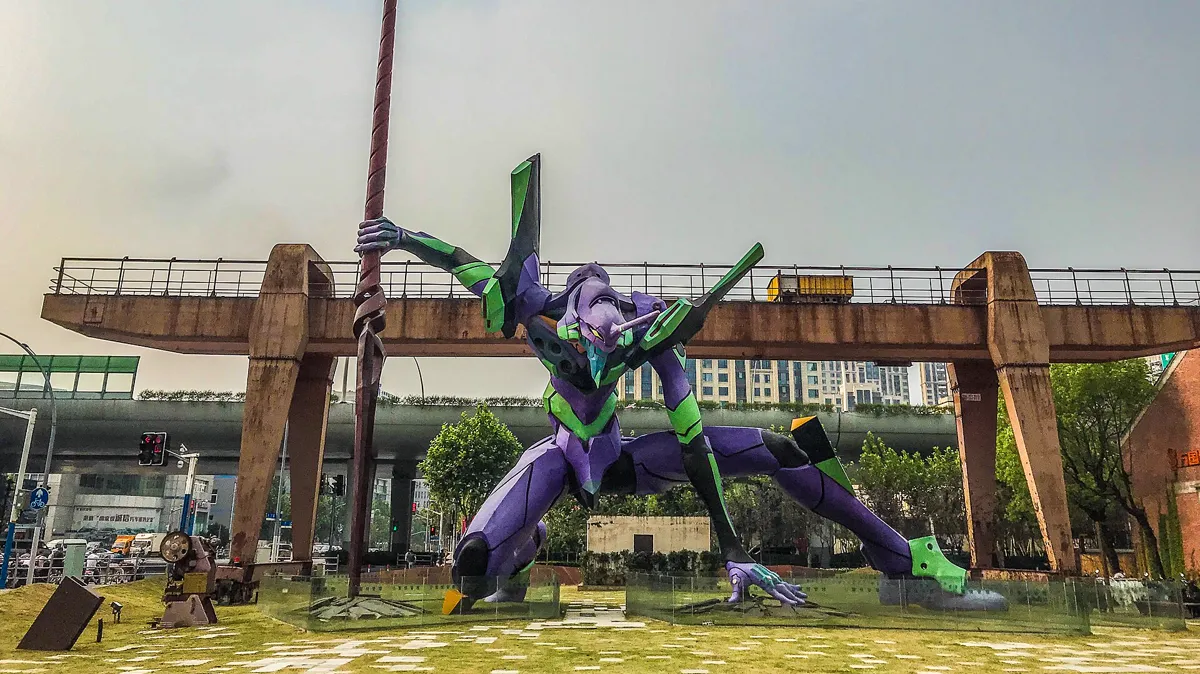
The examples fit. Kyoko Kirigiri in Danganronpa started from creator Kazutaka Kodaka’s wish to add a detective to the first game, according to Wikipedia’s Danganronpa character list. Ai Haibara in Detective Conan, a scientist who helps solve cases, is on Japanese Wikipedia’s kuudere example list. On the sci-fi side, Yuki Nagato is a humanoid interface built by an alien intelligence, and Rei Ayanami was described by director Hideaki Anno as created solely to pilot an Evangelion.
Rei matters for a second reason. Hayashibara recalled that few taciturn, emotionally cold characters existed in anime before Neon Genesis Evangelion, so she had no model to copy, according to Wikipedia’s Rei Ayanami article. Wikipedia’s kuudere article credits Rei with a major role in popularizing the type.
Sci-fi also raises the stakes of the warm-up arc. When the cold character is a clone, an android or an alien, “will they open up?” becomes “can they feel at all?” That’s a bigger question than a crush.
The possessive type sits at the far end of the scale; see what a yandere is. More terms live in our anime explainers.
Fans also ask
Can a boy be a kuudere?
Yes. The type is mostly used for girls, but Kotaku’s dere guide says the labels apply to male characters too. Japanese Wikipedia’s kuudere examples include Sesshomaru from Inuyasha, a cool, distant demon lord whose loyalty shows in what he does rather than anything he says.
Is coodere the same as kuudere?
Yes. Coodere and kūdere are just different romanizations of the same Japanese word, クーデレ. The “kuu” comes from the English “cool”, so some fans spell it with a C.
Is a kuudere just an emotionless character?
No. An emotionless character has nothing underneath. A kuudere has feelings and keeps them under control, so they leak out in small ways. If a character never shows any hidden warmth across the whole story, most fans would call them stoic or emotionless rather than kuudere.
Can one character be both a kuudere and a tsundere?
Yes, and it happens a lot. Professor Junichi Togashi’s 2008 paper even suggested a tsundere who never uses tsundere expressions could be classed as a kuudere. In practice, fans pick the label that fits most scenes: sharp and defensive means tsundere, calm and flat means kuudere.
What is the male version of a himedere?
An oujidere. Ouji is Japanese for prince, and Honey’s Anime describes the oujidere as a princely type who is haughty on the surface but has a good heart underneath, often closer to a kuudere than a tsundere.
How we researched this guide: definitions and word origins were checked against Wiktionary and the English and Japanese Wikipedia articles on kuudere, and type descriptions against Kotaku, Japanese with Anime, CBR and Honey’s Anime. Reader questions came from Reddit, Quora and YouTube. AI helped draft this guide; a human writer checked every fact and edited it.
Sources: Wiktionary, kuudere; Wiktionary, dandere and gap moe; Wikipedia, Kuudere; Japanese Wikipedia, クーデレ; Kotaku (August 2013); Japanese with Anime (July 2016); CBR (2022); Honey’s Anime (2016).