
Opening your first Japanese comic book often delivers a surprising moment of disorientation. Because Japanese publishing follows unique artistic conventions, learning the basics transforms an unfamiliar format into an intuitive visual journey.
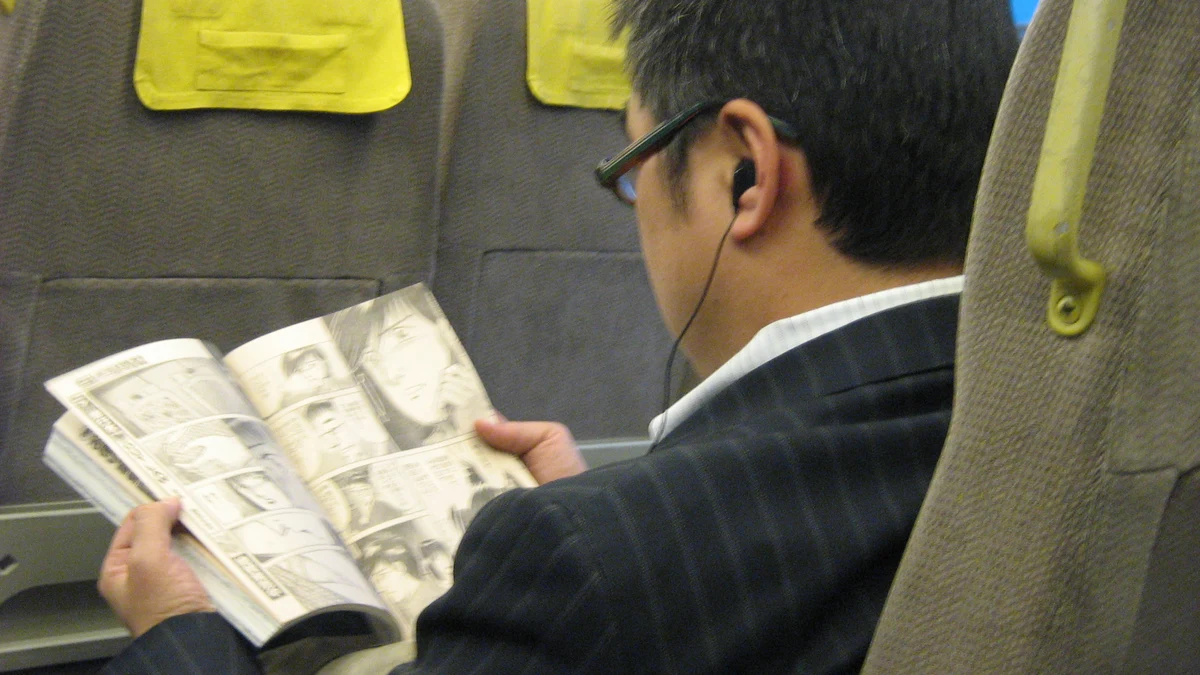
How to read manga: To read manga properly, follow pages and panels from right to left and top to bottom. Open the book with the spine facing right, read the upper-right panel first, follow speech bubbles from top-right downwards, and finish the entire right page before reading the left page.
Table of Contents
Table of Contents
Why Do You Read Manga From Right to Left?
You read manga from right to left because traditional Japanese writing, known as tategaki, is written vertically in columns ordered from right to left. Japanese graphic novels preserve this cultural orientation to maintain authentic artistic pacing, character eye contact, and emotional storytelling beats as the original creators intended.
When newcomers pick up an authentic graphic volume, the physical orientation feels reversed compared to Western books. The front cover of a Japanese book sits on what Western readers consider the back cover. During the 1990s, some American publishers attempted to flip or mirror artwork horizontally to match Western left-to-right reading habits. However, this process distorted original illustrations, made right-handed characters appear left-handed, reversed written background signage, and compromised the author’s visual framing.
By the early 2000s, major publishers like VIZ Media established the industry standard of publishing manga in un-flipped right-to-left formats. Today, readers simply turn pages from left to right, progressing backwards through the physical volume. If you accidentally open the book from the Western front side, publishers include a friendly graphic advisory illustrating correct reading direction.

Mastering this directional orientation quickly becomes second nature. Within two or three chapters, your eyes naturally track across panels without conscious effort. Our team at Komogear explores these foundational artistic conventions across our manga and light novel guides, helping readers navigate both classic anthologies and modern digital releases.
How to Read Manga Panels and Dialogue Bubbles in Order?
To read manga panels and dialogue bubbles in correct order, always start at the upper-right corner of the page and move horizontally to the left. Once you complete the top tier of panels, drop down to the next row and repeat the right-to-left sequence until reaching the bottom-left corner.
The universal panel hierarchy follows four sequential steps that govern virtually every published series:
- Step 1: The Top-Right Anchor Panel. Begin reading at the highest panel on the right side of the page. This panel establishes scene geography or character reactions.
- Step 2: Moving Horizontally Leftwards. Read across the top row from right to left. If multiple panels occupy the same horizontal tier, finish the rightmost frame before reading adjacent frames to its left.
- Step 3: Stepping Down to Subsequent Tiers. Once a horizontal tier concludes, drop your gaze down to the next row, resetting your focus back to the far right edge of the page.
- Step 4: Dialogue Bubble Flow Within a Panel. Inside any individual panel, read the highest speech bubble first, progressing downward and from right to left. Characters speaking earlier in the conversation occupy higher or rightward positions.
When navigating a two-page spread, always complete the entire right-hand page before moving your eyes over to the left-hand page. The only exception occurs during panoramic double-page splash illustrations, where dramatic landscape art spans across both pages seamlessly.
How Do Japanese Sound Effects Function on the Page?
Japanese sound effects, known as onomatopoeia, function as integrated visual artwork hand-drawn directly onto action panels. Rather than simple narrative descriptions, these stylized characters convey auditory noises, environmental weather conditions, emotional tensions, and physical textures that heighten narrative immersion.
Japanese linguistics divides expressive sound words into three distinct functional categories:
- Giseigo (Vocalized Sounds): Words mimicking sounds produced by humans and animals, such as crying, laughter, animal calls, or whispered conversations.
- Giongo (Inanimate Sounds): Words representing physical environmental noises, including thunder crashes, footsteps splashing on pavement, clattering swords, or engine roars.
- Gitaigo (Mimetic Psychological States): Words describing silent emotional states, body language, or tactile sensations that generate no audible noise in the real world. Famous examples include doki doki for an elevated heartbeat, shiin for heavy silence, and niko niko for a pleasant smile.
In licensed English editions, publishers adopt varied approaches to onomatopoeia. Some translators insert subtle English subtitles in small typography alongside original katakana characters, while other editions replace the lettering with English equivalents. Appreciating these visual flourishes adds emotional resonance to decisive battle encounters, as seen in long-running action sagas like our featured one piece filler guide.

Which Legal Digital Platforms Offer Official Manga Releases?
Several authorized digital platforms offer official, legal manga releases with high-resolution imagery and simultaneous chapter translations alongside Japanese publication schedules. Using verified platforms supports original creators, mangaka assistants, and professional localization teams directly.
International readers enjoy exceptional access through these reputable official services:
| Platform Name | Primary Publisher | Pricing Structure | Key Series Available | Platform Features |
|---|---|---|---|---|
| Shonen Jump App (VIZ) | Shueisha / VIZ Media | $2.99 monthly subscription | One Piece, My Hero Academia, Jujutsu Kaisen | Simultaneous releases, 100 chapters daily vault |
| MANGA Plus by Shueisha | Shueisha Global | Free basic chapters, app subscription | Chainsaw Man, Spy x Family, Boruto | Worldwide simultaneous access, multiple languages |
| K Manga | Kodansha | Ticket points and chapter purchases | Attack on Titan, Blue Lock, Fairy Tail | Official Kodansha simulpubs and digital catalog |
| BookWalker Global | Kadokawa | Individual volume purchases and sales | Broad manga and light novel catalogs | Official Kadokawa store with digital bookshelf perks |
| Public Library Apps (Libby / Hoopla) | Partnered with local libraries | 100% Free with valid library card | Curated collections from VIZ and Kodansha | Full tankobon graphic novel volume loans |
Subscribing to authorized platforms delivers superior image quality, accurate typography localization, and reliable archive continuity. Supporting legitimate platforms ensures talented artists receive fair royalties for their demanding creative work.
When reading digitally, configure your application settings to enhance readability. Most official applications permit toggling between vertical continuous scrolling and traditional horizontal page-flipping. For double-page spreads featuring panoramic battle sequences, horizontal mode or landscape tablet orientation provides the most immersive perspective, preserving the scale intended by the illustrator.
What Reading Conventions Govern Sequential Page Layouts?
Sequential manga page layouts use asymmetrical panel borders, character eye lines, and directional action angles to guide reader attention purposefully. Creators manipulate panel spacing and gutter widths to signal time progression, psychological introspection, and high-impact dramatic pauses.
When inspecting intricate pages, pay attention to panel borders. Normal panel borders feature white space known as gutters separating individual frames. When an author switches to flashback sequences illustrating past events, publishers frequently tint surrounding gutters solid black. This visual signal informs readers that the narrative temporarily departed the present timeline without needing explanatory dialogue.
Similarly, characters breaking across panel borders signal overwhelming power or emotional disruption. When a hero unleashes a signature strike that bursts beyond the framed outline, the artist intentionally breaks structural rules to evoke motion and speed across the page.
Community Questions and Answers Regarding Manga Reading
Below are clear, factual community questions and answers regarding manga reading order, physical page mechanics, and digital app navigation for beginning readers.
Do all Japanese comic books read from right to left?
Yes, all traditional Japanese manga reads from right to left. The only graphic formats originating in Asia that read left to right are Korean manhwa and Chinese manhua when published in modern vertical scrolling webtoon formats, or rare Westernized print editions.
How do you read a two-page spread in manga?
To read a two-page spread in manga, read the complete right-hand page first from top-right to bottom-left. Only after finishing the right page should you move your focus to the top-right corner of the left page, unless a single panoramic image spans across both pages simultaneously.
What does black space between manga panels mean?
Black gutters or darkened margins between manga panels indicate a flashback sequence depicting past memories. Authors use darkened backgrounds to help readers distinguish between current storyline events and historical recollections without cluttering panels with text explanations.
Can beginners read manga on phones or tablets comfortably?
Yes, modern reading applications like the Shonen Jump app and MANGA Plus feature optimized digital readers that support both page-by-page right-to-left navigation and horizontal pinch-to-zoom functions, providing crisp viewing experiences on mobile screens and tablets.
Why are speech bubbles shaped differently in manga?
Speech bubble shapes convey vocal tone and emotional intensity. Oval bubbles indicate normal speaking voices, jagged or spiky bubbles signify shouting or battle cries, fluffy cloud-like bubbles represent internal thoughts, and small rectangular boxes contain narration.
How we researched this: Our editorial team consulted official publishing guides from VIZ Media and Kodansha, interviewed experienced graphic novel translators, and tested navigation across licensed reading apps to create this beginner reference.