
Straight answer
Japanese honorifics are suffixes added to a name to show how close or how formal two people are. -san is the polite default, -sama is extra respectful, -kun is for juniors and boys, and -chan is affectionate. Dropping the suffix entirely, called yobisute, signals real intimacy or a deliberate insult.
You hear them in every episode. The classmate gets -kun, the kid sister gets -chan, the villain wants -sama. Most guides stop at a cheat sheet. The suffix is often the most honest line in the scene, so I want to go further.
This is the data version: usage numbers from Japanese broadcasters and schools, a chart built on who says it to whom, and a test for reading the moment a character switches suffixes. Japanese honorifics are shifting in Japan right now.

What are Japanese honorifics?
Japanese honorifics are short titles attached to a person’s name, such as -san, -sama, -kun and -chan, that mark respect, distance and affection between speaker and listener. Japanese calls them keishō, and the choice follows the relationship, not just the job title.
Think of them as a volume knob for formality. English speakers can skip Mr. and Ms. all day. Japanese speakers rarely say a name bare, and the suffix they pick tells you who sits higher and who is closer.
One rule trips up newer fans: you mention your own boss to an outside client without the honorific, because your group is “inside”. Wikipedia’s honorifics entry calls this the in-group rule.
Japanese honorifics chart: who says what to whom
The chart below sorts the common suffixes by direction (up, level, down) and adds the column guides skip: what a switch means. Usage notes come from the Japanese dictionaries quoted by the NHK Broadcasting Culture Research Institute in 2023, plus Wikipedia’s honorifics entry.
| Suffix | Written | Who says it to whom | Closest English | What a switch signals in a scene |
|---|---|---|---|---|
| -san | さん | Anyone to anyone, level or upward | Mr., Ms., or just a polite name | Switching to -san from a nickname means cooling off or getting formal |
| -sama | 様 | Staff to customers, worshippers to gods, anyone to a revered person | Sir, madam, “dear” on a letter | Using it in casual talk means worship, sarcasm or a servant role |
| -kun | 君 / くん | Seniors to juniors, teachers to boys, friends among boys | “young man”, a buddy’s surname | A boss using it on a woman marks seniority; a girl using it on a boy can mark a crush |
| -chan | ちゃん | Adults to small kids, close friends, couples | Little, sweetie, a pet name | Used on an adult stranger, it is teasing or talking down |
| -tan | たん | Baby talk, mascots, fan slang | “cutie” | Almost always comedy or a character playing cute |
| -senpai | 先輩 | Juniors to seniors in a school club or office | Upperclassman (full guide: what senpai really means) | A senior who stays “senpai” after a confession is being kept at arm’s length |
| -sensei | 先生 | Anyone to teachers, doctors, authors, politicians | Professor, Doctor | Calling a peer “sensei” is usually sarcasm about them acting like an expert |
| -dono | 殿 | Official letters, certificates, tea ceremony | Lord, “To:” on a memo | In modern dialogue it marks a stiff, old-fashioned or samurai-style speaker |
| No suffix (yobisute) | 呼び捨て | Family, partners, close friends, or someone being rude | A first name alone, or a surname barked like a drill sergeant | The single biggest relationship shift a script can make |
Source: dictionary entries (Daijirin 4th ed., Sanseido Kokugo Jiten 8th ed., Shinsen Kokugo Jiten 10th ed.) compiled by the NHK Broadcasting Culture Research Institute, 2023; Wikipedia, “Japanese honorifics”; usage as of October 2026.
Honest take: the last column is the one worth memorizing. Writers rarely change a suffix by accident. If a name loses its -san mid-season, rewind.
What does san mean?
San is the neutral, polite suffix you can put on almost anyone’s name, at any age and any gender, much like Mr. or Ms. but used far more often. According to the Seisen-ban Nihon Kokugo Daijiten on Kotobank, -san is a worn-down form of -sama, and it was in heavy use by the late Edo period.
Schools are pushing it even wider. A 2018 study in the Kyoto University of Education teaching bulletin found that 69 of the 98 Kyoto city elementary schools that answered the survey (70.4%) used “san” for every pupil, boys included, in some classes or across the whole school. The Mainichi Shimbun’s copy-desk column says the paper made a matching switch in spring 2016: -san for every child once they start school.
- Safe default: stranger, coworker, customer you are chatting with casually.
- Never on yourself: introducing yourself as “Tanaka-san” sounds either childish or arrogant.
What does sama mean?
Sama is the high-respect version of san, used for customers, deities, nobility and anyone you want to put clearly above yourself. In everyday Japan you see it most on envelopes, shop announcements and the phrase okyaku-sama, “honored customer”. In anime, casual -sama usually means a servant, a devoted fan, or a show-off.
Letters are where -sama quietly won a long fight. Japan’s National Language Council recommended in 1952 that the official-document suffix -dono be unified into -sama, according to the NINJAL language research Q&A page written by Fumiko Inoue. When the NHK Broadcasting Culture Research Institute asked people in Tokyo and Osaka in 1987 how a letter from a city office should address “Yamada Hanako”, close to 70% preferred -sama and under 20% were fine with -dono, the same NINJAL page reports.
So when a fantasy anime has an old retainer say -dono while the shopkeeper says -sama, it is deliberate. One sounds like a medieval warrant. The other sounds like a department store greeting.
What does kun mean?
Kun is a familiar suffix used on equals or juniors, mostly boys and young men, and it often carries a hint of seniority from the speaker. The Daijirin dictionary (4th edition, 2019) notes it was once a respectful title for equals and superiors, which is why it still sounds a little official in some settings, like Japan’s parliament.
Teachers use it on boys. Managers use it on junior staff. The Shinsen Kokugo Jiten (10th edition, 2022) adds that women now use -kun, and use it on women, more often than before. So yes, a girl can be “-kun”, usually because her boss sees her as a junior.

The National Diet is the strangest case. Chairs in Japan’s parliament have long called on members as “-kun”, a habit the Sanseido Kokugo Jiten (8th edition, 2022) lists as normal assembly usage. The Okinawa Times reported in January 2021 that more chairs were switching to -san, with some male chairs openly saying -kun sounded bossy.
And the public is split on kids. In a February 2023 NHK Broadcasting Culture Research Institute survey of 1,170 adults, -kun was the top pick for a boy’s name in a news report at every age band, with over 60% support for elementary school boys. When the same survey asked whether boys and girls should both just get -san, 47% said keep the current split, 28% said unify to -san, and among women in their 30s support for -san reached 51%.
What does chan mean?
Chan is an affectionate suffix for small children, close friends, family members and couples, and it carries a sense that the person is cute or dear to you. The NHK Broadcasting Culture Research Institute describes -chan as a changed form of -san, and the Sanseido Kokugo Jiten adds that kids and couples use it too.
It fades with age, at least in public. In that same 2023 NHK survey, about 40% chose -chan for a preschool boy in a news report, but support fell to 15% for grades 1 and 2, 7% for grades 3 and 4, and 4% for grades 5 and 6.
A learner with a Japanese given name described her school years in a LearnJapanese discussion on whether honorifics are fading: close friends used nicknames and -chan versions of her name, while people outside that circle used her name or surname with -san.
Cute internet suffixes come from this same family. -tan is baby talk built on -chan, and Wikipedia’s honorifics entry notes it is common for mascots and anthropomorphized characters. Think of it as the spoken cousin of the cute text faces in our guide to what uwu means.
What happens when a character drops the honorific?
Dropping the honorific, called yobisute, means calling someone by their bare name, and it signals either deep closeness or open disrespect. Family, partners and old friends do it naturally. A stranger or junior who does it uninvited is being rude, which is why anime uses the moment as a turning point.
That same LearnJapanese thread has a good real example. A university student hired to guide a group of Japanese high schoolers on a trip was told by the students to use their first names with no suffix at all. He wrote that it short-circuited his brain. The invitation came from them, which is what made it fine.
The four-question switch test:
- Which direction did it move? Toward no suffix means closer. Toward -san or -sama means colder or more formal.
- Who asked for it? “Just call me by my name” is an invitation. Doing it uninvited is a claim.
- Is anyone else listening? Many characters keep the formal suffix in public and drop it in private.
- Did it happen once? A single slip in a fight is anger. A permanent change is a new relationship.
Why do some subs and dubs keep honorifics and others cut them?
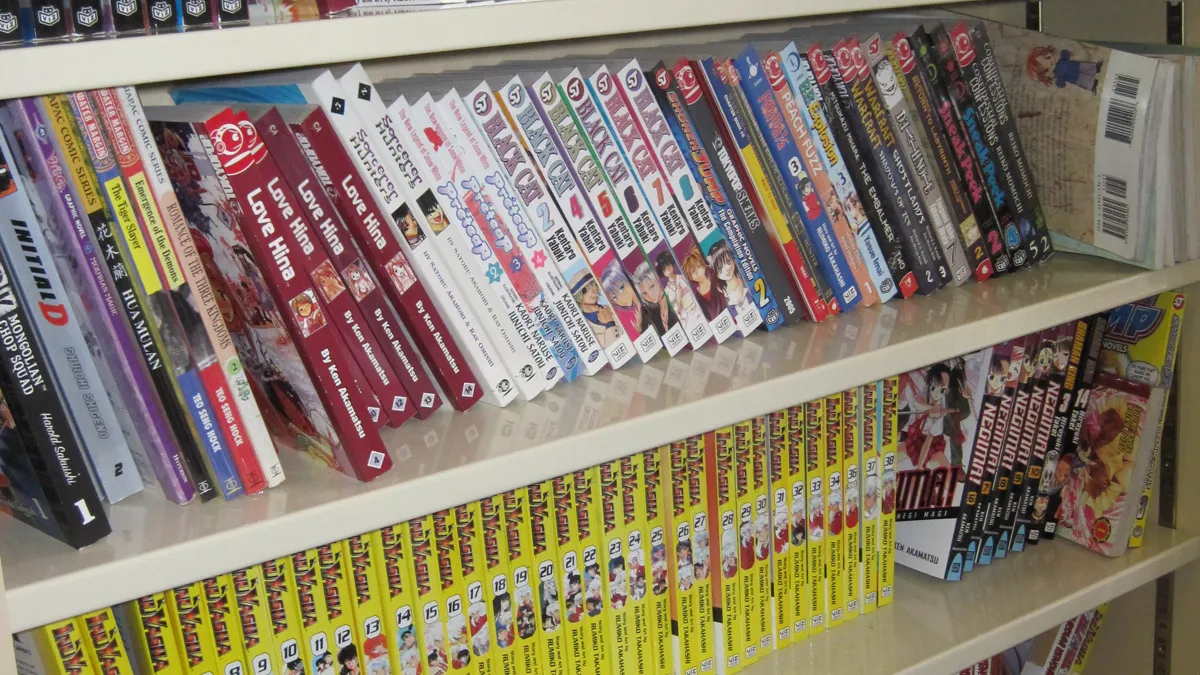
English releases keep or cut honorifics case by case, and the translator and editor usually decide. Manga journalist Deb Aoki, writing in Anime News Network’s Answerman column in September 2018, gave the common rule of thumb: keep them when the story is set in Japan and relationships matter, drop them when the story is set somewhere else.
Her examples: Viz kept honorifics in a volleyball series set in Miyagi Prefecture, while Yen Press and Kodansha Comics dropped them in series set in Victorian England, Central Asia and Viking-era Europe.
Dubs face a harder version of the same problem. A subtitle can show “Haruka-chan” in a few characters, but a voice actor saying “-chan” in English can sound like a fan imitation. The usual workaround is a first name, “Miss”, or a nickname. Senpai and sensei have no clean English match, so fans fight hardest over those.
Fans feel this split strongly. In a FanFiction community thread on honorifics, one reader explained that she got used to a dubbed, localized game with no suffixes, but for a series she followed subbed she needs them on the page, because they show how deep a relationship is in a way “Mr. Nakajima” never could.
- Subs: watch for name changes; the switch test still works.
- Dubs: first name versus surname usually stands in for the suffix.
- English manga: check the translation notes page for the publisher’s honorific policy.
Where do dono, sensei and shi still show up?
These three live mostly in writing and in specific jobs. -dono survives on certificates, official notices and in the tea ceremony. -sensei goes to teachers, doctors, lawyers, authors and manga artists. -shi (氏) is a formal written suffix for people you do not know personally, and the NHK style handbook names it, alongside -san, as its default for people in the news.
The Wikipedia honorifics entry lists -dono in business correspondence, awards and tea ceremony, and the NINJAL page notes that several prefectures, including Shizuoka and Kanagawa, switched their documents from -dono to -sama from the mid-1960s onward.
Sensei has one trap. In a 1999 Agency for Cultural Affairs survey cited by NINJAL, 69.1% said writing -sama to a teacher did not bother them and 23.4% said it did. The same page advises against stacking both as “sensei-sama”.
Honest take: if you only learn one rule from all of this, make it “default to -san and never use one on yourself”. The rest of Japanese honorifics you pick up from context, the same way the characters do. For more fandom vocabulary, the otaku culture section collects the rest of our term guides.
Fans also ask
Can you use an honorific on yourself?
No. In normal speech you never add -san, -sama or -kun to your own name, because honorifics show respect to someone else. Wikipedia’s honorifics entry lists the exceptions: arrogance (ore-sama, “my esteemed self”), acting cute with -chan, and adults teaching small children what to call them.
What honorific do you use for a company?
For a company or department on a letter, Japanese writers use onchū (御中) after the organization name instead of a personal suffix, according to the NINJAL language Q&A. In speech, customers as a group are okyaku-sama, “honored customers”.
Do Japanese people use honorifics with their parents?
Usually through kinship words rather than name suffixes. Okaa-san and otou-san already contain -san. The older reverent forms chichi-ue and haha-ue still exist, though Wikipedia’s honorifics entry notes they are no longer common.
Is -chan only for girls?
No. The NHK Broadcasting Culture Research Institute notes that -chan works for boys and girls alike, just like -san. It leans toward young children and close relationships, so grown men get it mostly from family, partners and old friends.
Do honorifics go on first names or last names?
Both, depending on closeness. Surname plus -san is the safe formal choice at work or school. Given name plus -chan or -kun is for friends and family, and a nickname plus -chan is common among close friends.
How we researched this guide: usage notes and survey figures were checked against the NHK Broadcasting Culture Research Institute’s 2023 committee report, the NINJAL language Q&A, a Kyoto University of Education study and Anime News Network. AI helped draft this guide; a human writer checked and edited it.
Sources: NHK Broadcasting Culture Research Institute, report on honorifics for children (2023); NINJAL Kotoba Kenkyūkan Q&A on letter honorifics; Kyoto University of Education, teaching bulletin no. 18 (2018); Mainichi copy-desk column; Anime News Network Answerman (2018); Okinawa Times (2021); Wikipedia, Japanese honorifics.